Apply for PR at 13? A Globally Rare Pathway Singapore Has Had for Years — Yet Few Know About It
IIn most countries, permanent residency is something you pursue after graduation—or even after years of work.
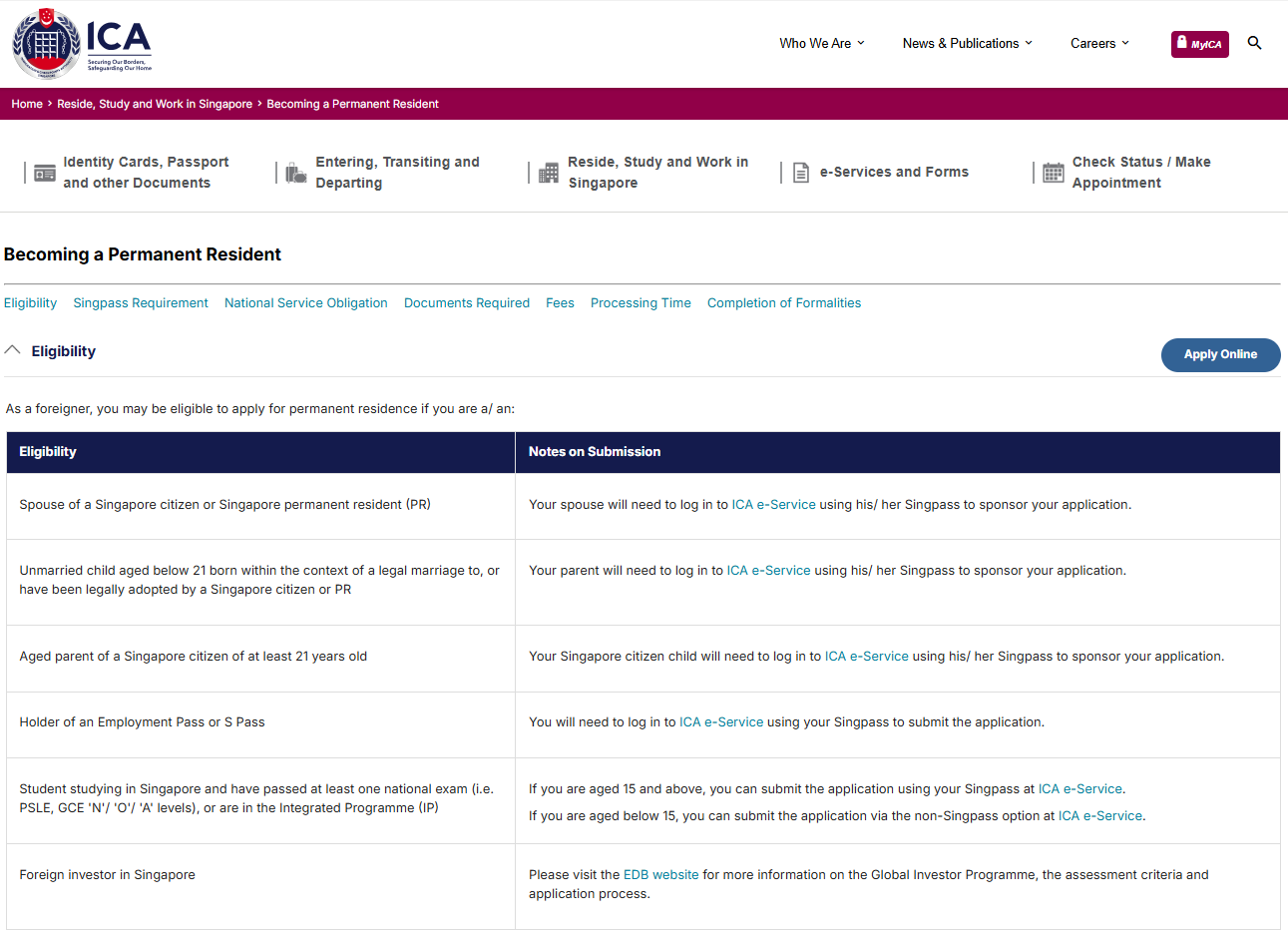
Singapore allows foreign students to apply for Permanent Residency (PR) under its Foreign Student Scheme, based on national examinations such as PSLE, GCE O-Level, A-Level, or the Integrated Programme (IP).
In Singapore, the PR pathway can begin as early as age 13.
— at the secondary school level.
This makes Singapore one of the very few systems where permanent residency consideration can begin during school years — not after graduation, but before it.
There is, however, an important compliance nuance. While ICA’s main PR page does not explicitly state a minimum duration of study as a formal requirement, earlier official guidance and FAQs have indicated that applicants are generally expected to demonstrate a meaningful period of residence in Singapore—historically referenced as around two years—together with academic progression through national examinations or the Integrated Programme.
This reveals something deeper about Singapore’s policy design.
It is not merely offering access to education.
It is assessing long-term settlement potential while the individual is still in the school system.
Beyond Scholarships: From Incentives to Identity
Many countries offer scholarships to attract international students.
But scholarships are temporary.
Across major immigration destinations:
Funding may reduce education cost
Post-study visas may extend stay
Yet these do not provide long-term certainty.
Singapore’s model is fundamentally different:
It allows school-stage international students to enter the pathway of permanent residency consideration
Among major developed immigration systems reviewed—including the U.S. Citizenship and Immigration Services, UK Home Office, Department of Home Affairs, Immigration, Refugees and Citizenship Canada, and Immigration New Zealand—
there is no comparable framework where secondary-school-level international students are directly considered within a PR pathway.
The global norm remains:
Education → Work → PR
Singapore introduces a different sequence:
Education → PR consideration → Work
What Early PR Actually Changes
What makes this pathway truly powerful is not just early access to PR.
It changes three critical aspects of a child’s future at the same time
1. Education Cost Structure
The difference between Permanent Residents and international students in Singapore is not marginal—it is structural.
Tuition fees for PR holders are significantly lower
Access to public education pathways is more stable
University positioning and fee structures become more favourable
PR fundamentally reduces the long-term cost of education
2. Career Certainty
A child who secures PR before entering the workforce does not face employment visa uncertainty.
PR holders:
Do not require employer-sponsored work passes
Can change jobs freely without visa reapplication
Are not subject to foreign workforce quotas
Career decisions are driven by opportunity—not immigration constraints
In addition, certain roles in Singapore are only open to Citizens or Permanent Residents.
3. Family Strategy Flexibility
Perhaps most importantly:
Parents do not need to qualify for migration themselves
They do not need to:
- Meet high-income thresholds
- Hold advanced degrees
- Compete in skilled migration systems
Parents can continue:
- Their careers
- Their businesses
- Their existing life arrangements
While the child independently builds a pathway to long-term residency.
Why This Matters: A Different Kind of Talent Strategy
From a policy perspective, Singapore is doing something few countries attempt:
Identifying talent before it is globally contested
Embedding individuals early into its national system
Allowing residency pathways to be shaped through education, not just employment
This is not an immigration shortcut.
It is a long-horizon human capital strategy embedded within the education system itself.
A Strategic Reminder for Parents
The key question is no longer:
Where should my child study?
But rather:
Which system is willing to anchor my child’s future early?
Because in most countries:
Education ends → uncertainty begins
In Singapore:
Education begins → long-term positioning becomes possible
Adepture View
While most countries compete for talent after graduation, Singapore operates much earlier:
as early as age 13
By allowing students to enter PR pathways during their formative years, Singapore is not just attracting talent—it is shaping it.
In most countries, lower education costs, job security, and residency are achieved separately, over many years.
In Singapore, they can begin together—starting as early as age 13.