As the U.S. Tightens Adjustment of Status, More Global Talent Is Looking Beyond America
Over the past few months, I have noticed an interesting shift in conversations with clients based in the United States.
Many of them are exactly the people one would expect to remain committed to the U.S. immigration pathway. They include AI professionals in Silicon Valley, finance executives in New York, multinational corporate leaders, entrepreneurs, and highly skilled professionals who have already filed, or are preparing to file, EB-1A or National Interest Waiver (NIW) petitions.
Yet increasingly, the questions they ask are no longer about priority dates, processing times, or when their Green Card might be approved.
Instead, they are asking a different question: What are the serious alternatives if the United States is no longer the only option?
This shift did not emerge in a vacuum.

In May 2026, U.S. Citizenship and Immigration Services (USCIS) issued Policy Memorandum PM-602-0199, reaffirming that Adjustment of Status (AOS) is an “extraordinary relief” and a discretionary immigration benefit rather than an entitlement. The memorandum also emphasised that consular processing remains the ordinary immigrant visa process.
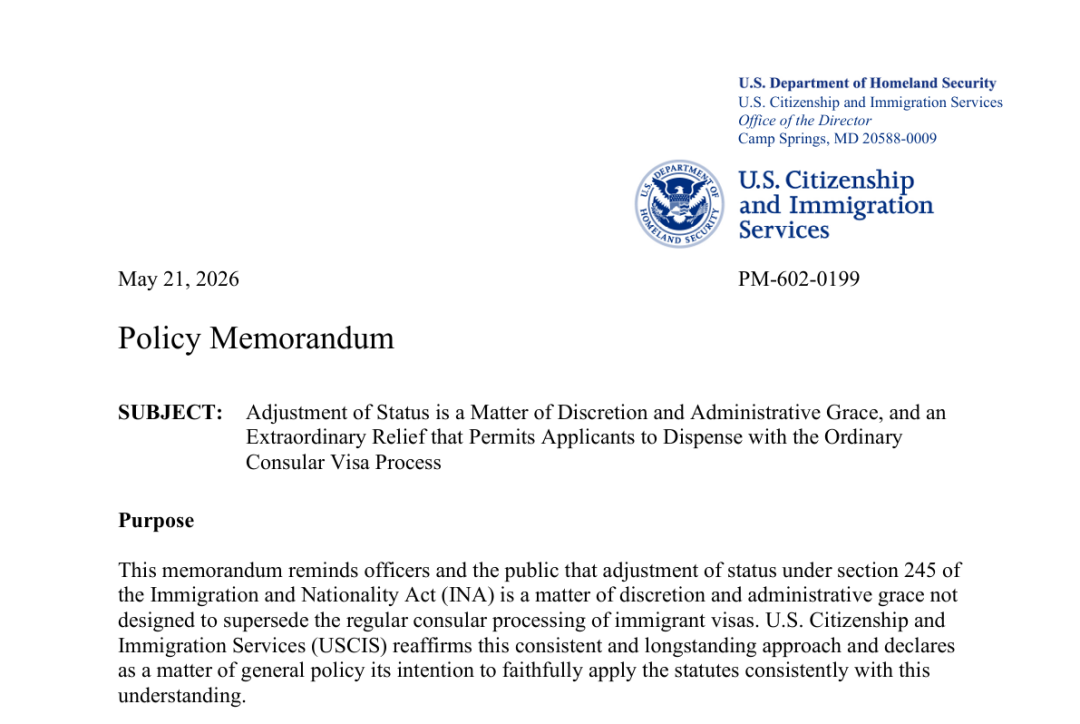
Legally speaking, the U.S. has not abolished Adjustment of Status. Form I-485 remains available, and eligible applicants can still pursue permanent residence from within the country. However, the language used by USCIS is significant. It signals a renewed policy emphasis on discretionary review and the traditional consular pathway.
For immigration practitioners, employers, and applicants alike, this is more than a technical policy clarification. It is a reminder that assumptions which have shaped immigration planning for decades may no longer be as certain as they once appeared.
What I find most interesting, however, is not the policy itself.
U.S. immigration rules have evolved continuously for years under both Republican and Democratic administrations. Policy changes are not new.
What is changing is how highly skilled individuals are responding.
Historically, when professionals encountered immigration uncertainty in the United States, their instinct was to find another pathway within the U.S. system.
Today, a growing number are evaluating opportunities outside the United States altogether.
One client recently put it rather well. After spending most of his professional career in the American technology sector, he remarked that he had devoted years to understanding how to obtain U.S. permanent residence, but very little time considering whether there were other countries equally worthy of the next twenty years of his life.
That observation captures a broader trend.
For much of the last two decades, the United States represented the default destination for global talent. The world’s most ambitious entrepreneurs, engineers, researchers, executives and investors generally viewed America as the natural endpoint of their international careers.
The United States remains an extraordinary market. It remains the world’s largest economy, one of the most innovative societies, and a global centre for technology, finance and entrepreneurship.
But for the first time in many years, it is no longer the only country actively competing for global talent at scale.
Singapore is perhaps one of the clearest examples.

While many people still associate Singapore primarily with finance, the city-state has quietly evolved into one of the world’s most effective talent hubs. The introduction of the ONE Pass in 2023 reflects a deliberate strategy to attract internationally recognised professionals, executives, founders and innovators.
What makes the ONE Pass particularly attractive is not simply immigration status. It is flexibility.
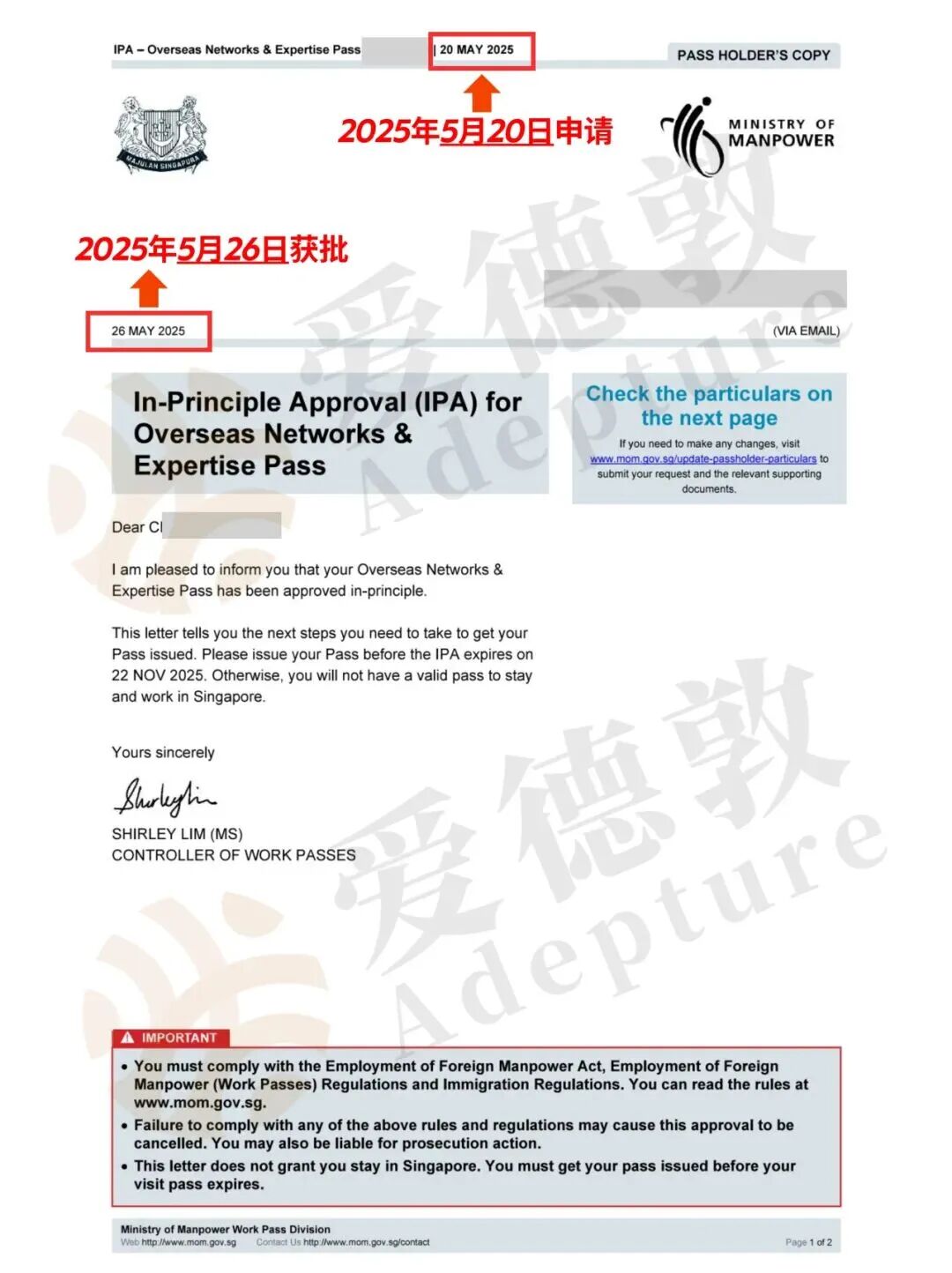
Successful applicants receive an initial five-year pass. They are not tied to a single employer. They can move between companies and industries without restarting the immigration process, and their spouses are eligible to work.
For senior professionals navigating corporate restructuring, industry transitions or changing market conditions, that flexibility can be extraordinarily valuable.
We recently assisted a U.S.-based applicant whose ONE Pass approval was issued within four working days. The significance was not merely the speed of approval. It was the ability to regain certainty and optionality during a period of professional transition.
Singapore’s appeal extends beyond immigration policy.
Its personal income tax rates remain highly competitive by developed-market standards. Corporate tax rates remain among the lowest in major global business centres. There is no capital gains tax and no estate duty. Combined with its legal framework, political stability, international connectivity and position as Asia’s leading wealth management and family office hub, Singapore increasingly serves as both a professional and financial base for globally mobile individuals.

Australia, meanwhile, attracts a different profile of applicant.
Many of the professionals we meet who ultimately choose Australia are not primarily motivated by tax efficiency or business expansion. They are thinking about family, long-term certainty and quality of life.
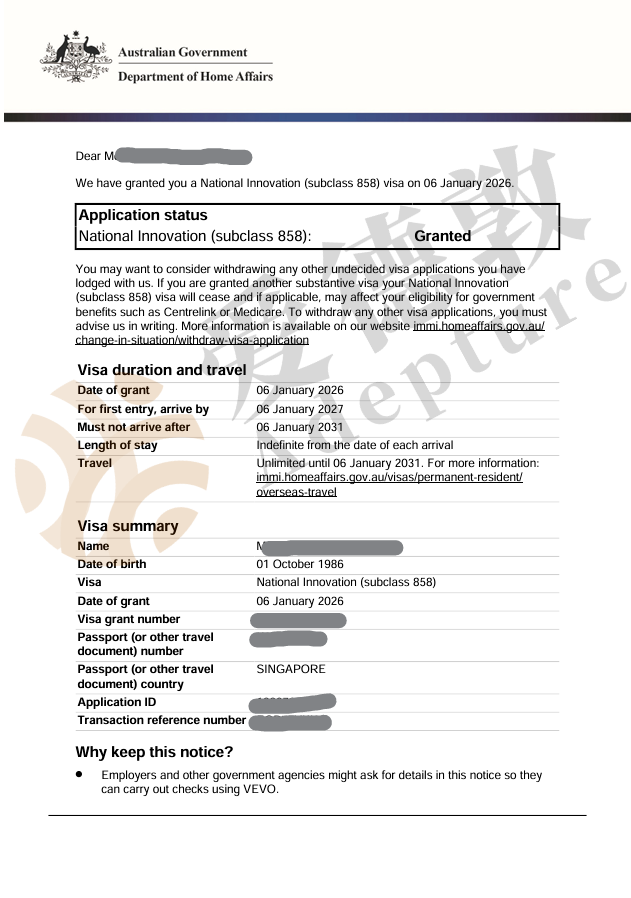
For qualified applicants, the Skilled Independent Visa (Subclass 189) remains one of the few mainstream immigration pathways capable of delivering permanent residence directly. At the same time, Australia’s National Innovation Visa (NIV) has created new opportunities for globally recognised innovators, researchers, entrepreneurs and industry leaders.
The distinction is important.
Singapore’s ONE Pass often appeals to individuals seeking professional mobility and career flexibility.
Australia’s permanent residence pathways tend to appeal to those prioritising long-term stability for themselves and their families.
Neither approach is inherently better. They simply solve different problems.
Ultimately, the most important lesson from recent U.S. policy developments may have little to do with immigration law.
The real story is that an increasing number of highly skilled individuals are no longer approaching global mobility as a single-country decision.
Twenty years ago, the conversation was largely about how to get into the United States.
Today, the conversation is increasingly about how to build resilience, opportunity and optionality across multiple jurisdictions.
This is not a rejection of America.
Nor is it a prediction of American decline.
Rather, it reflects a broader reality of an increasingly competitive world: countries are competing for talent, and talented individuals have more choices than ever before.
For businesses, diversification across markets is considered prudent strategy.
For investors, diversification across asset classes is considered common sense.
Increasingly, global talent is beginning to apply the same principle to residency, career planning and long-term family strategy.
The United States remains important.
But for many internationally mobile professionals, important and exclusive are no longer the same thing.