U.S. EB-5 May Rise Above US$900,000 From Jan 1, 2027. Why Is The Industry Rushing Before Sept 30, 2026?
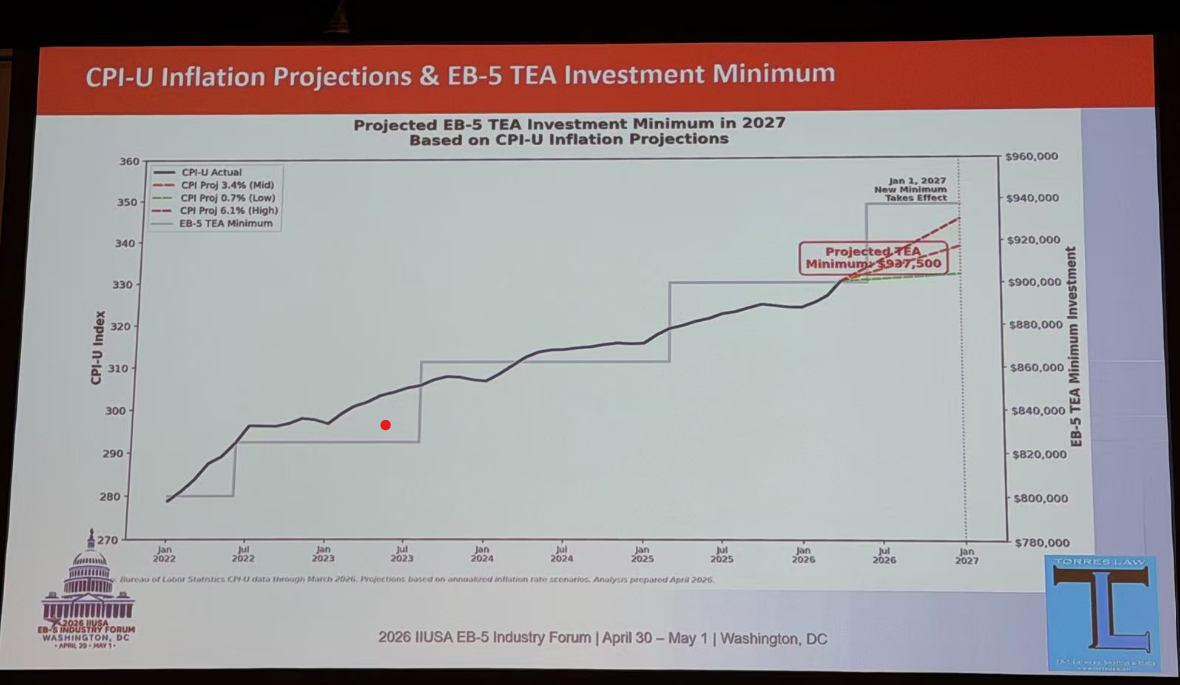
The U.S. EB-5 minimum investment threshold is expected to rise from today’s US$800,000 TEA level to above US$900,000 beginning January 1, 2027.
Discussions at the recent IIUSA Industry Forum in the United States, however, pushed market attention toward a different issue entirely: filing timing.
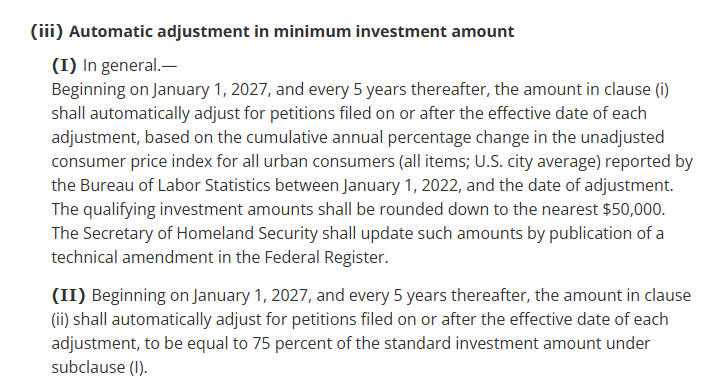
The reason sits inside the EB-5 Reform and Integrity Act of 2022 (RIA), which introduced an automatic inflation-adjustment mechanism into the programme for the first time.
Beginning in 2027, EB-5 investment thresholds are scheduled to adjust according to cumulative CPI-U inflation data published by the U.S. Bureau of Labor Statistics, with further adjustments every five years thereafter.
The U.S. government has not yet formally announced the final post-2027 figures. However, the calculation framework is already fixed.
Using official CPI-U data from January 2022 through March 2026, cumulative inflation has exceeded 17%. On current estimates, the standard EB-5 threshold could rise from US$1.05 million to approximately US$1.2–1.25 million, while TEA investments may move from US$800,000 to roughly US$900,000–950,000.
The range exists because the statute does not specify which CPI measurement month must ultimately be adopted, while also requiring the final amount to be rounded down to the nearest US$50,000.
Another provision in the same law is now drawing even greater attention.
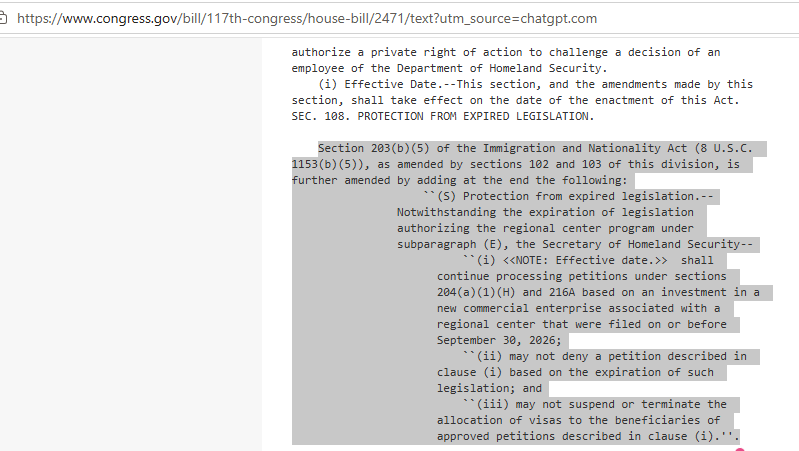
Section 108 of the RIA — titled “Protection From Expired Legislation” — states that regional center EB-5 petitions filed on or before September 30, 2026 remain protected even if the regional center legislation later expires.
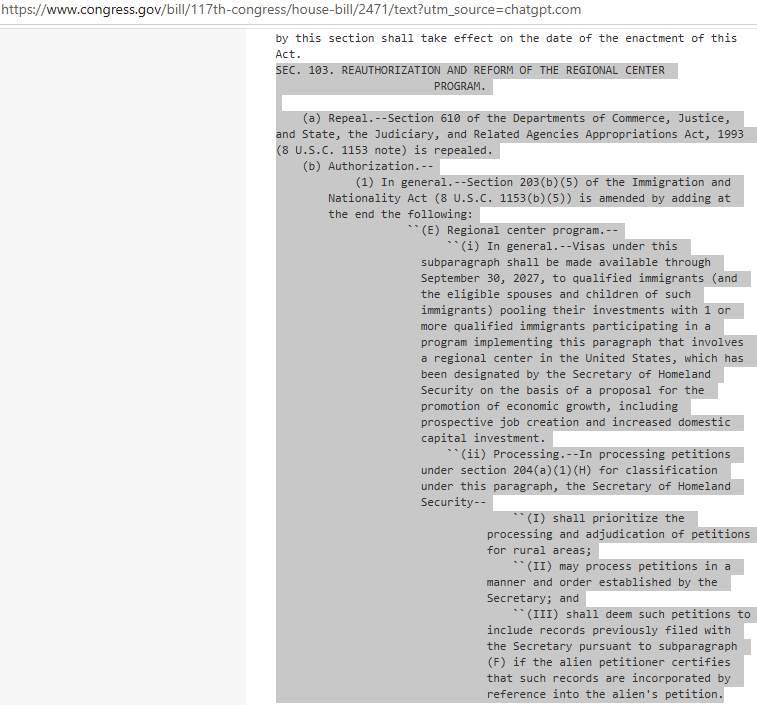
Meanwhile, the regional center programme itself remains authorized through September 30, 2027.
That creates a distinction the market increasingly considers strategically important.
Applications may still be filed after September 2026. However, petitions submitted before September 30, 2026 appear to benefit from a clearer statutory protection framework if future legislative, political or regulatory disruptions occur.
The timing issue has become more relevant as the United States approaches a more sensitive political cycle.
The November 2026 midterm elections may reshape congressional control. Future EB-5 reauthorization discussions will move closer into focus. The programme will also enter its first inflation-linked pricing adjustment period since the RIA was enacted.
Current law continues to authorize the regional center framework through 2027. The question facing investors is not programme availability, but future predictability.
Sophisticated investors increasingly view the next 12–18 months as a legislative positioning window rather than simply a pricing window.
A later filing may still secure access to the programme — but potentially under a higher investment threshold and a less predictable policy environment.
That is why September 30, 2026 is increasingly being treated by the market as a strategic filing deadline.
If you are already considering the U.S. EB-5 pathway, the next 12–18 months may represent one of the most important timing windows since the 2022 reform.
Our Singapore-based advisory team works with global families, entrepreneurs and high-net-worth investors on U.S. residency planning, source-of-funds structuring and EB-5 project selection strategies.
For private consultation or eligibility assessment, feel free to contact us directly.