Is China Starting to Treat Talent as a Strategic Asset?
One topic has dominated discussions across China’s legal, investment and technology communities over the past few days.
It is not tariffs.
It is not AI.
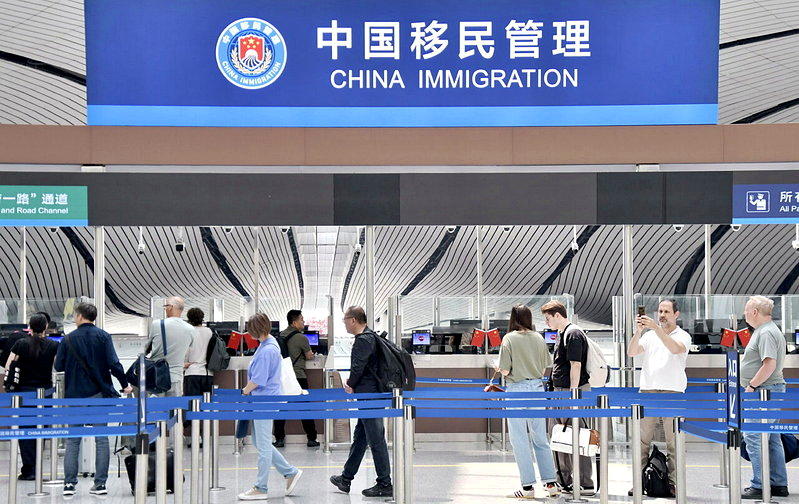
It is China’s new Exit and Entry Regulation, which takes effect on 15 September 2026.
At first glance, the regulation appears to be another update to immigration administration. But one provision has attracted particular attention: individuals who violate export control or technology import and export rules, in ways that may endanger China’s industrial or technological security, can be prohibited from leaving the country.
This has prompted an important question:
Is China extending technology export controls to the movement of people?
This Is Not a General Talent Ban
The regulation does not prohibit engineers, scientists, entrepreneurs or other professionals from working overseas.
It is not a blanket restriction on international mobility, nor does it establish a list of industries whose employees are automatically prevented from leaving China.
The provision applies to specific individuals whose conduct violates export control or technology transfer rules and may threaten national industrial or technological security.
Yet the broader regulatory signal is significant.
When Technology Moves Through People
Traditionally, technology controls have focused on identifiable assets:
products being exported, source code being transferred, patents being assigned, or sensitive data crossing borders.
The new question is whether technology can also move through people.
A founder does not relocate with only a passport. They may carry years of proprietary research and development experience.
A semiconductor engineer may possess manufacturing processes that are difficult to document or reproduce.
An AI researcher may carry model architecture knowledge, optimisation methods and commercially valuable expertise that cannot easily be separated from the individual.
In strategic industries, people are not merely employees. They may also be carriers of technology, know-how and commercial capability.
New Question for Global Employers
For global companies, the issue is no longer simply:
Can we recruit the best talent from China?
It increasingly becomes:
Can that talent legally relocate, and can the knowledge, data and intellectual property surrounding them move as well?
This distinction matters because a successful visa application does not guarantee that a candidate can leave China.
A signed acquisition agreement does not guarantee that founders and engineers can relocate.
Hiring a technical team does not automatically give the new employer the right to use knowledge, data or intellectual property developed within a previous organisation.
Why the United States May Feel It First
US technology companies, venture capital firms and private equity investors have long used investment, acquisition and recruitment to access Chinese capabilities in AI, semiconductors, robotics and advanced engineering.
Future due diligence may need to assess more than whether a transaction can legally close.
Investors may also need to determine whether:
- founders can leave China;
- core technical teams can relocate;
- China-origin technology and data can be transferred;
- an overseas-registered company remains connected to Chinese technical assets;
- Chinese regulatory approval should become a condition of closing.
The central risk is no longer simply whether the company can be acquired.
It is whether the talent, technology, data and intellectual property can actually be delivered after the acquisition.
Singapore’s Restructuring Model May Face More Scrutiny
Singapore has frequently been used by Chinese technology companies to establish international headquarters, raise overseas capital, hold intellectual property and expand into Southeast Asia and Western markets.
However, overseas incorporation alone may no longer be sufficient to establish that a company has become entirely foreign.
Regulators may look more closely at:
- where the technology was originally developed;
- where the core research team is based;
- how intellectual property was transferred;
- whether China-based entities continue to provide technical support;
- where data remains stored;
- whether founders have relocated in substance or only on paper;
- whether an overseas structure was designed to avoid technology export or investment review.
The result is a higher compliance threshold for overseas restructuring involving China-origin technology.
Europe Faces Risks in Industrial and Green Technology
European companies rely heavily on Chinese engineering capabilities in electric vehicles, batteries, renewable energy, industrial robotics, advanced manufacturing, chemicals and new materials.
Recruiting one engineer may remain relatively straightforward.
Relocating an entire technical team, transferring manufacturing expertise or reproducing a China-developed production process overseas may be very different.
Potential consequences include longer recruitment timelines, incomplete team relocation, delays in factory commissioning and difficulties integrating acquired technology.
The key issue is not whether all Chinese engineers will be prevented from moving overseas.
It is whether a particular relocation also involves controlled technology, technical data, industrial processes or knowledge belonging to a former employer.
Capital and Fast Visas May No Longer Be Enough
The Middle East has become an increasingly active destination for Chinese talent in AI, data centres, clean energy, robotics, smart cities and communications.
The UAE, Saudi Arabia and other markets can offer significant capital, attractive compensation and rapid immigration processes.
But these advantages may not be sufficient if the commercial value of a project depends on restricted technology, proprietary data or the relocation of an entire technical team.
Employers may need to determine whether a candidate is contributing general professional expertise or transferring controlled technology, source code, data or dual-use capabilities.
Southeast Asia May Need Deeper Localisation
Factories in Vietnam, Malaysia, Thailand and Indonesia often rely on Chinese plant managers, production engineers, equipment specialists and process experts during manufacturing relocation.
Ordinary overseas assignments will not automatically be affected.
However, where a project involves controlled equipment, materials, software, industrial processes or technical data, personnel deployment may no longer be treated as a simple staffing matter.
Overseas manufacturers may need to train more local engineers, reduce long-term dependence on Chinese technical teams and assess personnel, equipment, software and data as one integrated cross-border compliance issue.
The Impact Extends Beyond Technology Companies
The organisations most exposed may not be technology employers themselves.
They may include:
- global venture capital and private equity firms;
- multinational manufacturers;
- executive search companies;
- universities and research institutes;
- EOR and Global Mobility providers;
- corporate services firms;
- investment banks and law firms;
- overseas industrial parks attracting Chinese technical teams.
Each of these organisations may need to expand its risk framework.
Talent mobility, technology ownership, data governance and cross-border investment can no longer be reviewed separately.
The Traditional Playbook Is Changing
The old model was relatively simple:
Find a Chinese technical team → establish an overseas entity → arrange visas → transfer intellectual property and data → complete financing or acquisition.
The emerging model may look very different:
Identify the origin of the technology → determine whether it is controlled → verify intellectual property and data ownership → assess whether key personnel can relocate → obtain the necessary approvals → complete the transaction.
This could lead to longer deal timelines, lower valuations and more failed closings.
A company may still be acquired, but its founders or core engineers may not be able to relocate.
An overseas factory may still be built, but the technical team required to commission it may not arrive on time.
A research institute may hire a leading scientist, but still face questions about the ownership of the data, methods and results that shaped their expertise.
The Real Global Impact
The greatest disruption may not be a sudden shortage of Chinese professionals.
It may be the weakening of a business model that assumes talent, technology, data and intellectual property can move together once an overseas company and visa structure are in place.
This should not be described as a general ban on Chinese talent leaving the country.
A more accurate description is:
the emergence of technology-security controls over the cross-border movement of key personnel.
That is why the significance of China’s new regulation extends far beyond immigration.
For global businesses, the real message is clear:
In strategic industries, talent mobility, technology transfer, intellectual property, data governance and cross-border investment are increasingly becoming part of the same regulatory equation.